

Buying an apartment is one of the most important financial decisions in a person’s life. For many people, it represents years of savings, careful planning, and long-term commitment. However, during the process of selecting an apartment, buyers often rely on assumptions or incomplete information that can lead to poor decisions. These misconceptions may arise from market rumors, advice from friends, or lack of awareness about the property buying process.
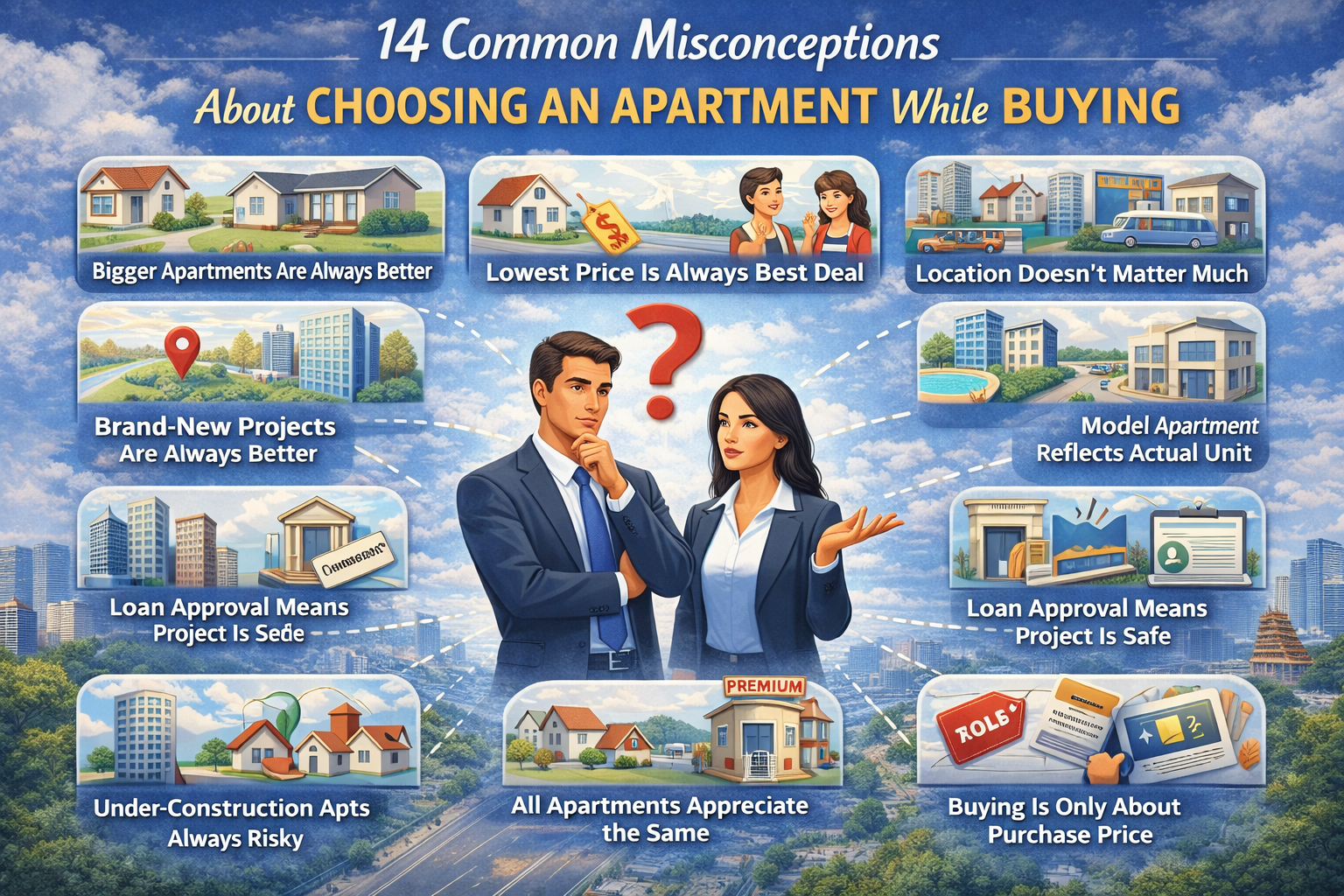
Understanding the truth behind these common misconceptions can help buyers make better choices and avoid costly mistakes. Below are 14 common misconceptions people often have when choosing an apartment while buying a home.
1. Bigger Apartments Are Always Better
Many buyers assume that a bigger apartment automatically means a better purchase. While space is important, it should not be the only factor considered. A larger apartment may come with higher maintenance costs, increased utility bills, and a higher purchase price.
Sometimes a well-designed smaller apartment can offer better functionality and comfort than a larger but poorly planned one. Buyers should focus on efficient layout, usable space, and practicality rather than just square footage.
2. The Lowest Price Is Always the Best Deal
Some buyers believe that choosing the lowest-priced apartment will give them the best value for money. However, price alone should never be the deciding factor.
Apartments priced significantly lower than market value may have hidden issues such as poor construction quality, legal complications, or limited amenities. It is important to evaluate the builder’s reputation, project approvals, and location benefits before making a decision.
3. Location Doesn’t Matter Much
Another misconception is that location is not very important as long as the apartment itself looks attractive. In reality, location is one of the most critical factors in real estate.
Good locations offer better connectivity, access to schools, hospitals, shopping centers, and workplaces. A well-located apartment also tends to appreciate more in value over time compared to properties in less developed areas.
4. Brand-New Projects Are Always Better
Many buyers prefer brand-new projects because they assume that newer developments are always superior. While new projects often have modern amenities, older buildings can sometimes offer advantages such as larger room sizes, established neighborhoods, and ready infrastructure.
It is important to evaluate both new and resale properties before making a decision.
5. Amenities Are More Important Than Practical Needs
Modern apartment projects often advertise numerous amenities such as swimming pools, gyms, clubhouses, and landscaped gardens. While amenities enhance lifestyle, they should not overshadow practical factors such as apartment layout, ventilation, parking space, and construction quality.
Buyers should prioritize daily living needs rather than focusing only on luxury features.
6. A Beautiful Model Apartment Reflects the Actual Unit
Builders often showcase well-decorated model apartments to attract buyers. These sample flats are designed with premium furniture, lighting, and interiors to create a strong impression.
However, the actual apartment delivered may look very different without these design elements. Buyers should focus on structural aspects such as room size, natural lighting, ventilation, and finishing quality rather than being influenced only by interior decoration.
7. All Builders Provide the Same Quality
Another common misconception is that all builders follow similar construction standards. In reality, builder reputation plays a major role in the quality and reliability of a project.
Some developers are known for timely delivery and superior construction, while others may face delays or quality issues. Buyers should research the builder’s past projects, customer reviews, and delivery track record before purchasing.
8. Loan Approval Means the Project Is Completely Safe
Some buyers assume that if a bank approves a housing loan for a project, it automatically guarantees that the project is legally flawless.
While banks do conduct basic checks before approving loans, buyers should still verify documents independently. Important aspects such as land ownership, project approvals, and registration compliance should always be carefully reviewed.
9. The Higher the Floor, the Better the Apartment
Many people believe that higher floors are always more desirable because they offer better views and reduced noise levels. While this may be true in some cases, higher floors may also have certain drawbacks.
These can include higher pricing, longer waiting times for elevators, and sometimes stronger wind exposure. Buyers should choose the floor level that suits their comfort and lifestyle preferences.
10. Under-Construction Apartments Are Always Risky
Some buyers avoid under-construction projects because they believe they are always risky. While delays can occur in certain cases, many under-construction projects are completed successfully and offer several advantages.
These advantages may include lower pricing during early stages, flexible payment plans, and better unit selection. Buyers should evaluate the builder’s track record before deciding.
11. All Apartments Appreciate at the Same Rate
A common misunderstanding is that all properties increase in value over time. While real estate generally appreciates in the long term, the rate of appreciation depends on several factors such as location, infrastructure development, and demand in the area.
Apartments located near upcoming infrastructure projects, employment hubs, or transportation networks tend to experience stronger price growth.
12. Corner Apartments Are Always the Best Choice
Corner apartments are often considered more attractive because they may offer better ventilation and privacy. However, they may also come with certain disadvantages such as higher pricing or increased exposure to sunlight and heat.
Buyers should evaluate both advantages and disadvantages before assuming that corner units are always the best option.
13. Buying an Apartment Is Only About the Purchase Price
Many first-time buyers focus only on the apartment’s base price and overlook additional costs associated with the purchase.
These extra costs may include:
- Registration and stamp duty
- Maintenance charges
- Parking fees
- GST (for under-construction properties)
- Interior and furnishing expenses
Considering the total cost of ownership is essential for making an informed decision.
14. Buying an Apartment Is a Simple One-Time Decision
Some buyers believe that once they find a suitable apartment, the decision-making process is straightforward. In reality, purchasing a property involves careful evaluation of multiple factors including finances, legal documentation, future resale potential, and lifestyle requirements.
Taking time to research, compare projects, and consult experts can help buyers make a well-informed decision.
Conclusion
Buying an apartment is a significant milestone that requires careful planning and informed decision-making. Unfortunately, many buyers rely on misconceptions that can lead to poor choices or unnecessary financial stress.
By understanding the common myths associated with apartment buying, buyers can approach the process with greater clarity and confidence. Factors such as location, builder reputation, construction quality, long-term value, and overall cost should always be considered before making a purchase.
Avoiding these 14 common misconceptions allows buyers to make smarter decisions and select an apartment that truly meets their needs, lifestyle, and investment goals.
With the right research and professional guidance, purchasing an apartment can become a rewarding and fulfilling experience rather than a confusing or stressful one.




Join The Discussion